The kitchen,
bottled cold.
Why we started Rasveda — and what we're trying to keep alive in every bottle.
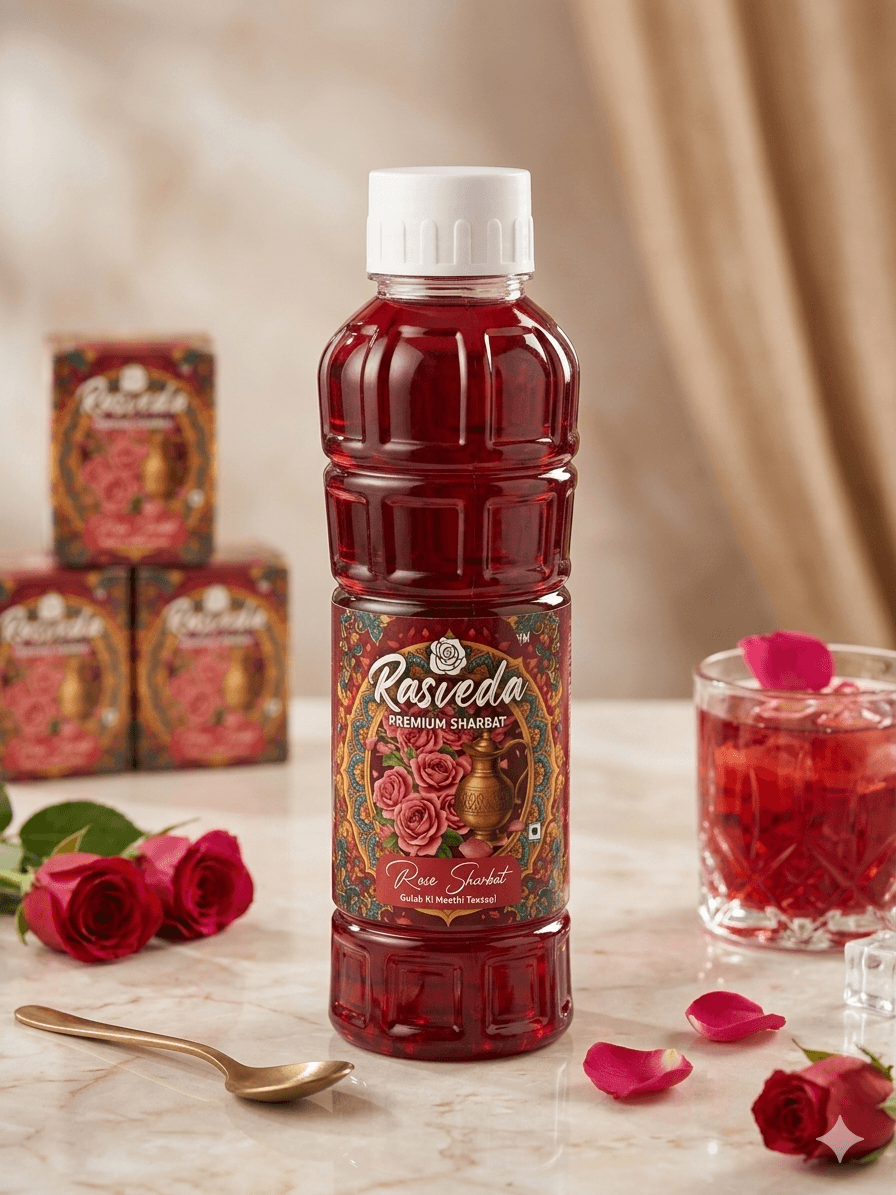
Rasveda began in a kitchen in Punjab — with the kind of sharbat every household used to make: a clean simple syrup, real fruit pulp, real spices, finished in a glass with ice and salt. The bottle on the shop shelf, every summer, never tasted like the one we made at home.
We started Rasveda to close that distance. Not to invent a new sharbat, but to bottle the everyday one — the one your dadi made — at honest quality, and ship it across India.
Every bottle starts with simple syrup made fresh in our Punjab kitchen — sugar, water, time. Then the recipe takes over: real mango pulp for Mango, litchi pulp for Litchi, lemon pulp for Lemon, rose water for Rose, and for Jeera a six-way spice mix of roasted jeera, soonth, black pepper, rock salt and black salt.
We finish each bottle with a measured pour of natural flavour — what carries the drink across a glass of cold milk or soda. No artificial colour, no concentrate, no overclaim. What's on the label is what's in the bottle.
Rasveda is small on purpose. Six sharbats, made small-batch, growing only as fast as we can keep the taste honest. Subscribers get first pour; everyone else gets what's left.
The work is to keep the kitchen taste alive across thousands of bottles. Different summer, different sugar, different sit — same drink. We've got a long way to go and we'd love your help getting there.